
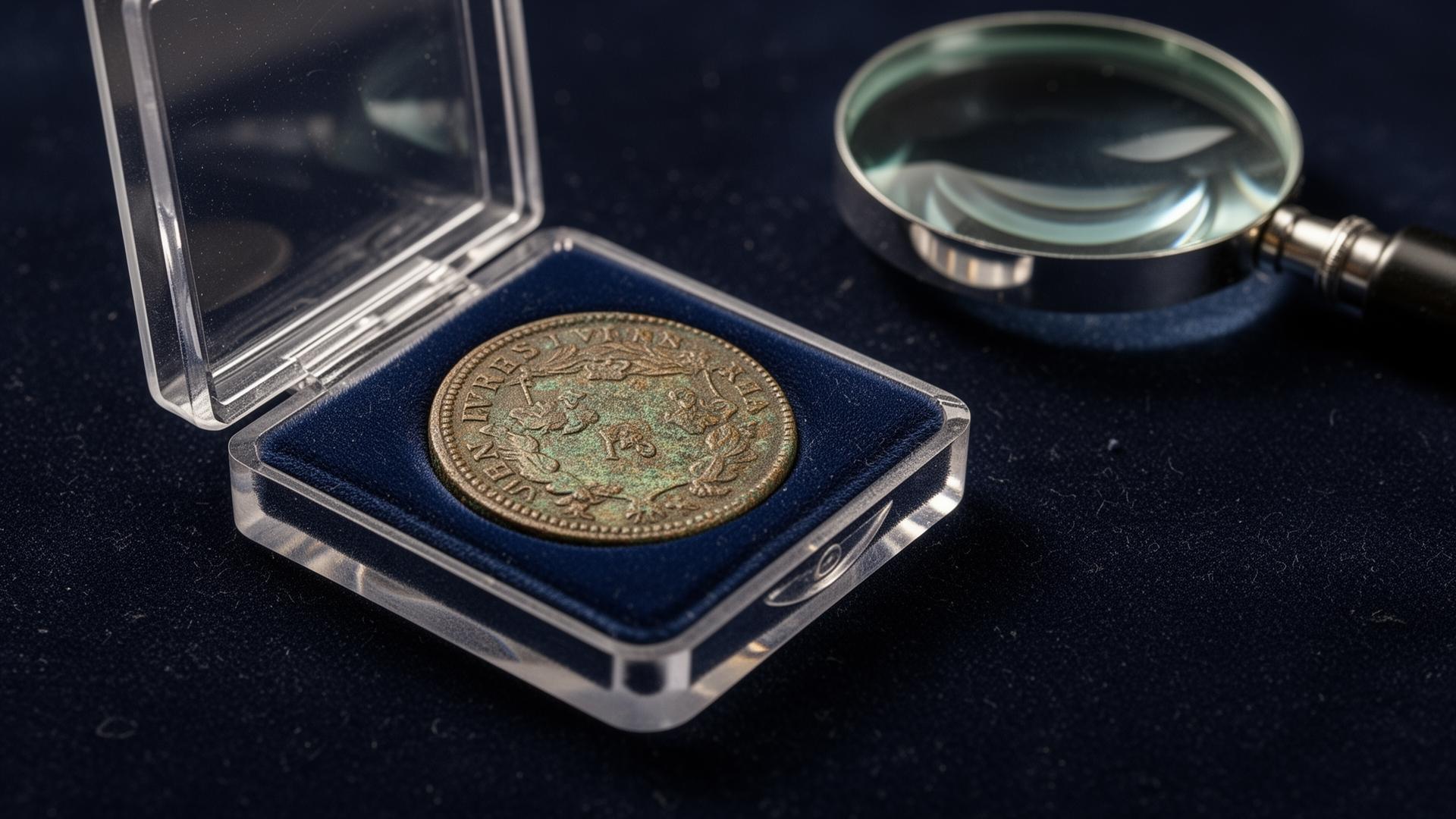
Quarters Worth Money: The Complete Guide to Valuable Quarters
From silver Washington quarters to rare state quarter errors, learn which quarters are worth far more than 25 cents.
Most quarters are worth exactly 25 cents. But certain dates, mint marks, errors, and silver content can push a quarter's value from a few dollars to well over $100,000. The difference between a common pocket-change quarter and a valuable one often comes down to details that are easy to miss without experience. If you are sorting through old coins or inherited a collection, this guide from our Coin Values series will help you identify what to look for.
Every quarter minted before 1965 contains 90% silver, which means it is always worth more than face value — typically $4 to $6 based on the current silver spot price. Key dates within the Washington, Standing Liberty, and Barber series can be worth hundreds or thousands more. US Gold and Coin buys valuable quarters of every type and offers free appraisals based on current market data, not outdated price guides. If you are not sure what you have, send us photos or bring your quarters to any of our locations.
Silver Quarters (Pre-1965)
Full dedicated guide to silver quarter values →
All U.S. quarters minted in 1964 and earlier were struck in 90% silver and 10% copper. This means every one of them — regardless of date or condition — has a minimum value tied to the silver market. At current silver prices, a single pre-1965 quarter contains roughly $4 to $6 worth of silver. That floor price rises and falls with the spot market, but it ensures these coins are always worth multiples of face value.
Washington silver quarters (1932–1964) are the most common silver quarters we buy. Most circulated examples trade near their melt value, but two dates stand apart. The 1932-D Washington quarter had a mintage of only 436,800, making it the key date of the entire series. The 1932-S is nearly as scarce at 408,000 minted. In Fine condition, a 1932-D sells for $200 or more. In Mint State, it can reach $15,000. Common-date Washington silver quarters in average circulated condition bring $4 to $15 depending on wear and the day's silver price.
Standing Liberty quarters (1916–1930) are among the most beautiful U.S. coins ever produced. The 1916 issue — the first year of the series — had a mintage of just 52,000 and commands $5,000 or more even in well-worn condition. The 1918/7-S overdate, where the 8 was punched over a 7, is one of the great rarities in American numismatics and has sold for over $100,000 in high grades. Even common-date Standing Liberty quarters in Good condition bring $10 to $30 because of their silver content and collector appeal.
Barber quarters (1892–1916) are named for their designer, Charles E. Barber. Most circulated examples trade for $8 to $40 depending on date and condition. The key dates to watch for are the 1896-S, 1901-S, and 1913-S — all low-mintage issues that bring strong premiums. A 1901-S Barber quarter in Good condition sells for $5,000 or more. If you have silver dimes from the same era, those follow a similar value pattern based on condition and rarity.
Valuable Washington Quarters After 1965
Starting in 1965, the U.S. Mint switched from 90% silver to a copper-nickel clad composition. That means most quarters you find in pocket change from 1965 onward have no precious metal value and trade at face. However, a small number of clad-era quarters are worth collecting — and occasionally worth real money — because of mint errors, low populations in high grades, or unusual varieties.
The 1970-S proof quarter has gained attention because a handful were reportedly struck on 1941 Canadian quarter planchets. If verified by PCGS or NGC, these pieces sell for $500 or more. The 1974-D doubled die shows clear doubling on the obverse lettering and is a recognized variety worth $50 to $200 in uncirculated grades. The 1982 Philadelphia and Denver issues are notable because the Mint did not publish mintage figures for those years, creating uncertainty that collectors find intriguing.
For most post-1965 quarters, the rule is simple: unless the coin has a visible error, an unusually sharp strike, or is in original uncirculated condition with full luster, it is worth 25 cents. The exceptions are specific enough that they require individual inspection — which is exactly what we do during a free appraisal.
State Quarters Worth Money
Full dedicated guide to state quarters worth money →
The 50 State Quarters program ran from 1999 to 2008 and produced billions of coins — over 34 billion across all states and mints. That volume means most state quarters are worth exactly 25 cents, regardless of which state is on the back. Complete sets in uncirculated condition sell for $15 to $25, which barely covers the face value plus a small premium. The money in state quarters is in the errors.
The most famous state quarter error is the 2004 Wisconsin Extra Leaf variety. Some Wisconsin quarters show an extra leaf on the corn stalk — either pointing up (High Leaf) or down (Low Leaf). These were caused by a die gouge or intentional die damage, and they sell for $50 to $300 depending on condition and variety. The 2005 Minnesota quarter has a doubled die reverse that shows extra trees in the design, bringing $25 to $200. The 1999 Delaware "Spitting Horse" variety shows a raised die crack near the horse's mouth that creates the appearance of spitting — a minor variety worth $10 to $50.
The single most valuable coin related to the state quarter program is the 2000 Sacagawea dollar/Washington quarter mule. This is a coin struck with a Washington quarter obverse die and a Sacagawea dollar reverse die — a wrong-die error that the Mint has never officially acknowledged. Only a handful are known to exist, and they have sold at auction for $50,000 to over $100,000. Finding one is extraordinarily unlikely, but it demonstrates that modern U.S. coins can still produce major rarities.
The America the Beautiful quarters (2010–2021) and American Women quarters (2022–2025) are still too new for most varieties to be cataloged. Some error coins from these series have appeared, including off-center strikes and clipped planchets. If you have half dollars from this period, error coins follow similar value patterns based on severity and authentication.
Gold Quarters: What Are They Worth?
No U.S. quarter was ever officially minted in gold. If you have a quarter that appears gold-colored, it is almost certainly a standard clad quarter that has been gold-plated after leaving the Mint. These are novelty items — often sold on television shopping channels or in gift sets — and they are worth face value to most buyers. The gold plating adds no numismatic premium and in some cases actually reduces the coin's value because it is considered an alteration.
The Sacagawea dollar is sometimes confused with a gold quarter because of its golden color and relatively small size. It is a dollar coin, not a quarter, and its composition is manganese brass over a copper core — not gold. Standard Sacagawea dollars are worth $1 in circulated condition. The only exception is the previously mentioned mule error struck with a quarter obverse die, which is worth tens of thousands.
Quarter Error Coins Worth Money
Mint errors create some of the most valuable quarters in existence. Off-center strikes occur when the planchet is not properly centered in the press — the more dramatic the misalignment, the higher the value. A quarter struck 10% off-center might bring $20 to $50. One struck 50% off-center with the date still visible can sell for $200 or more. The key is that the date must remain readable; without it, the coin cannot be attributed and loses much of its premium.
Doubled die errors show visible doubling in the lettering, date, or design elements. This happens when the die receives a second impression at a slightly different angle during production. The 1918/7-S Standing Liberty overdate is one of the most dramatic examples in the quarter series. Wrong planchet errors — where a quarter is struck on a dime-size or nickel-size blank — are rare and typically bring $500 to $5,000 depending on the denomination mismatch. Missing clad layer errors, which expose the copper core on one or both sides, sell for $25 to $200.
A word of caution: most "errors" that people find are not mint errors at all. Post-mint damage from coin-counting machines, vending mechanisms, or environmental exposure can create marks that look like doubled dies or die cracks. The difference between a genuine mint error worth hundreds of dollars and post-mint damage worth nothing requires professional examination. PCGS and NGC authentication provides certainty, and our team can give you an initial assessment before you invest in grading.
How to Tell If Your Quarter Is Valuable
Check the Date and Mint Mark
Pre-1965 means silver — always worth more than face value. Key dates from any era command premiums. Look for the small letter (D, S, P) on the obverse near the date or behind Washington's ponytail. No mint mark on older coins means Philadelphia.
Look for Errors
Use a magnifying glass or jeweler's loupe. Look for doubling in the lettering, off-center strikes, missing design elements, or unusual surfaces. Compare both sides of the coin to known error varieties for that date. Even minor die cracks can signal a recognized variety.
Assess the Condition
Uncirculated quarters are worth significantly more than worn examples. Look for original mint luster — a cartwheel effect when you tilt the coin under light. Sharp, unworn details on Washington's hair and the eagle's feathers indicate a higher grade. Never clean a coin — it destroys value.
Still not sure? Send us a photo or bring your quarters to any US Gold and Coin location for a free expert appraisal.
Most Valuable Quarters Ever Sold
While most quarters will not sell for six figures, these auction records show how valuable rare quarters can be. Even common silver quarters are consistently worth several times face value.
Have Quarters You Think Might Be Valuable?
Whether you found a silver quarter in your change, inherited a collection, or discovered what might be an error coin, our experts can tell you exactly what your quarters are worth. Free appraisals, no obligation, same-day payment if you decide to sell.
Visit us in Dallas, Austin, Tampa, Fort Worth, Waco, Kansas City, or Overland Park. We also offer mail-in appraisals nationwide. Read our Selling Guide for a full walkthrough of the process.
Quarters Worth Money FAQ
What quarters are worth money?
How do I know if my quarter is silver?
Which state quarters are worth the most?
Are bicentennial quarters worth anything?
What is a 1970 quarter worth?
How much is a silver quarter worth in melt value?
What quarter errors should I look for?
Where can I sell valuable quarters?
Ready to Find Out What Your Quarters Are Worth?
Get a free, no-obligation appraisal from our expert team.