
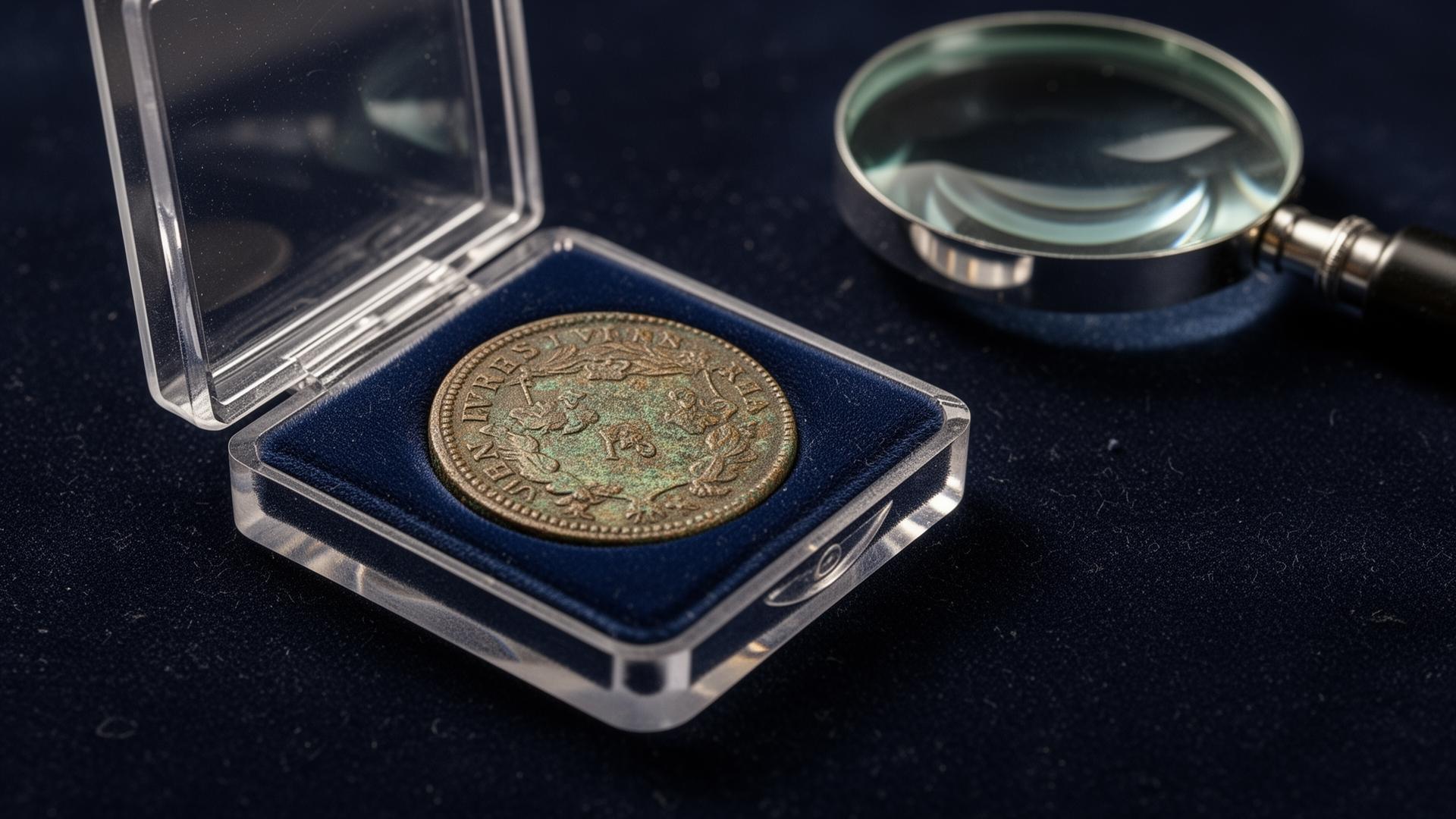
Dollar Coin Values: Which Dollar Coins Are Worth Money?
Presidential dollars, Sacagawea dollars, Susan B. Anthony dollars, and more. Most are worth face value, but some are worth hundreds.
Dollar coins are some of the most misunderstood coins in American numismatics. Most people assume they must be valuable because of their size and denomination. The truth is simpler: the vast majority of modern dollar coins — Presidential, Sacagawea, and Susan B. Anthony — are worth exactly one dollar. The US Mint produced billions of them, and because the public never adopted them for daily use, huge quantities sit in uncirculated condition in rolls, bags, and bank vaults. Supply is high. Demand is low. That keeps prices near face value for common dates.
But there are exceptions worth knowing about. Error coins from the Presidential dollar series, rare varieties of the Sacagawea dollar, and a handful of Susan B. Anthony varieties are genuinely valuable. And if your dollar coins predate 1935 — Morgan and Peace silver dollars — they are in a different category entirely. This guide from our Coin Values series covers the non-silver dollar coins and helps you identify which ones are worth more than a dollar.
Presidential Dollar Coins (2007–2016)
The Presidential Dollar series ran from 2007 to 2016, honoring each US president in order of service. Four new designs were released each year, featuring the president's portrait on the obverse and the Statue of Liberty on the reverse. Unlike previous dollar coins, the date, mint mark, and motto "In God We Trust" were placed on the edge — a design choice that led to the series' most famous errors.
Standard Presidential dollars are worth $1 to $2 regardless of condition. The Mint produced them in massive quantities, and public rejection meant most went straight from the Mint to Federal Reserve vaults. Later issues (2012–2016) were produced only for collectors, resulting in lower mintages, but even these rarely exceed $3 to $5 in uncirculated rolls. The coins people are searching for are the errors.
The "Godless dollar" — a 2007 Washington dollar missing its edge lettering — was the first and most publicized error. Without the edge inscription, the coin lacks "In God We Trust," the date, and the mint mark. These sold for $50 to $300+ when first discovered. The same error occurred on 2007 Adams and Jefferson dollars. Double edge lettering errors, where the inscription was applied twice, also exist and sell for $30 to $200+. The most valuable Presidential dollar errors are wrong planchet strikes — a dollar struck on a quarter or cent blank — which can bring $500 to $10,000+ at auction.
Sacagawea Dollar Values (2000–Present)
The Sacagawea dollar launched in 2000 with a distinctive golden color designed to distinguish it from the unpopular Susan B. Anthony dollar. It features Sacagawea, the Shoshone woman who guided the Lewis and Clark expedition, on the obverse. From 2009 onward, the reverse has featured annually changing designs honoring Native American contributions, and the series was renamed the Native American dollar. Standard Sacagawea and Native American dollars are worth $1 to $2. They were produced in large numbers and rarely circulated, so even uncirculated examples are common at $2 to $5.
The valuable Sacagawea dollars are all from the year 2000. The Cheerios dollar is the most famous: approximately 5,500 Sacagawea dollars with a subtly different reverse die were inserted into Cheerios cereal boxes as a promotion. The tail feathers on the eagle show enhanced detail compared to the standard issue. Authenticated Cheerios dollars sell for $5,000 to $25,000 depending on condition. The 2000-P Wounded Eagle variety features a visible die gouge across the eagle's breast on the reverse — it trades for $100 to $300+.
The crown jewel of modern dollar coins is the 2000-P Sacagawea/Washington quarter mule. This error was struck with a Sacagawea dollar obverse die and a Washington quarter reverse die. Only 15 to 20 are known to exist. Authenticated examples have sold for $50,000 to over $100,000 at major auctions. If you have a 2000-dated dollar coin that looks unusual, it is worth having it examined.
Susan B. Anthony Dollar Values (1979–1981, 1999)
The Susan B. Anthony dollar was the first US coin to honor a real, non-mythological woman. It replaced the large Eisenhower dollar in 1979 with a smaller, lighter coin intended for vending machine use. The public immediately rejected it. At 26.5mm in diameter, the SBA dollar was nearly identical in size to the quarter (24.3mm), leading to constant confusion. Production stopped after 1981, and the coin was briefly revived in 1999 to bridge the gap before the Sacagawea dollar launch.
Most Susan B. Anthony dollars are worth $1 to $2. Even uncirculated examples rarely exceed $3 to $5 because so many were produced and so few entered circulation. The variety worth looking for is the 1979-P Wide Rim, also called the Near Date variety. On this coin, the date sits noticeably closer to the rim than on the standard Narrow Rim version. Wide Rim examples sell for $10 to $50+ depending on grade. The 1981-S Type 2 proof features a clear, sharply defined "S" mint mark compared to the more common filled or blobby Type 1 version. Type 2 proofs are scarce and trade for $50 to $200+. The 1999-P was widely saved by collectors anticipating it would be the last SBA dollar, so despite a mintage of over 29 million, uncirculated examples bring just $3 to $5.
Older Dollar Coins
Full dedicated guide to Eisenhower Dollar values (1971–1978) →
If your dollar coin predates the Susan B. Anthony series, you likely have something more valuable. Morgan Silver Dollars (1878–1921) and Peace Silver Dollars (1921–1935) are covered in our dedicated silver dollar guide. But several other dollar coin types are rarer still and should always be professionally appraised before selling.
Trade Dollars (1873–1885) were struck primarily for commerce in Asia and contain 0.7878 troy ounces of silver — slightly more than a Morgan dollar. Circulated examples in identifiable condition trade for $100 to $500+. Key dates and proof issues can reach $5,000 or more. Seated Liberty Dollars (1840–1873) are scarce in any grade, with common dates starting around $200 in circulated condition and key dates reaching $50,000+. The earlier Draped Bust Dollar (1795–1803) and Flowing Hair Dollar (1794–1795) are genuinely rare coins. Even well-worn examples bring $1,000 or more, and top specimens have sold for millions — the 1794 Flowing Hair Dollar holds the record at over $10 million. If you have any dollar coin minted before 1878, contact US Gold and Coin for a free, expert appraisal before making any decisions about selling. These coins can also be explored in our Coin Values reference guides.
Dollar Coin Errors Worth Money
Dollar coins have produced some of the most dramatic and valuable errors in modern US coinage. The edge lettering process on Presidential dollars was especially prone to mistakes during the first years of production. Missing edge lettering is the most common error — hundreds of thousands of 2007 dollars escaped the Mint without the edge inscription that contains "In God We Trust," the date, and the mint mark. These "Godless dollars" generated national media attention and sell for $50 to $300+ depending on the specific president and grade.
Wrong planchet errors are the most valuable dollar coin errors. A Sacagawea dollar struck on a dime-sized planchet or a Presidential dollar struck on a cent blank produces a dramatically undersized coin that is immediately recognizable as an error. These bring $500 to $10,000+ depending on the planchet type and condition. Off-center strikes, where the design is shifted but the coin retains its full diameter, trade for $50 to $500+ depending on how far off-center the strike landed. The more dramatic the error, the higher the value. As with all error coins, professional authentication from PCGS or NGC is critical — altered and counterfeit errors exist, and buyers will pay full market value only for authenticated pieces.
How to Tell If Your Dollar Coin Is Valuable
Step 1: Identify the Type
Presidential dollars show a president's portrait and have edge lettering. Sacagawea/Native American dollars show Sacagawea with an infant on the obverse and have a smooth edge. Susan B. Anthony dollars are silver-colored and smaller than Sacagawea dollars. If your dollar coin is large and heavy (38mm), it may be an Eisenhower, Morgan, or Peace dollar — check our silver dollar values guide.
Step 2: Check for Errors
On Presidential dollars, examine the edge. If there is no lettering at all — no date, no mint mark, no motto — you have a missing edge lettering error worth $50 to $300+. On Sacagawea dollars dated 2000, look at the eagle on the reverse for die gouges (Wounded Eagle) and compare tail feather detail to reference images (Cheerios variety). On Susan B. Anthony dollars dated 1979-P, check whether the date is close to the rim (Wide Rim variety).
Step 3: Get a Professional Opinion
Dollar coin errors can be subtle, and many supposed errors turn out to be post-mint damage or environmental effects. If you think you have a valuable variety or error, the safest step is a free appraisal from a dealer who handles these coins regularly. US Gold and Coin evaluates dollar coins every week and can tell you immediately whether yours carries a premium. Read our Selling Guide for more on how to get the best price for your coins.
Have Dollar Coins Worth Selling?
Whether you have a collection of Presidential dollars, a roll of Sacagawea coins, or older dollar coins you are unsure about, US Gold and Coin will evaluate them for free. We have purchased over $50 million in coins and precious metals since 2010 and pay the same day you accept our offer.
Visit us in Dallas, Austin, Tampa, Fort Worth, Waco, Kansas City, or Overland Park. We also accept insured mail-in submissions nationwide.